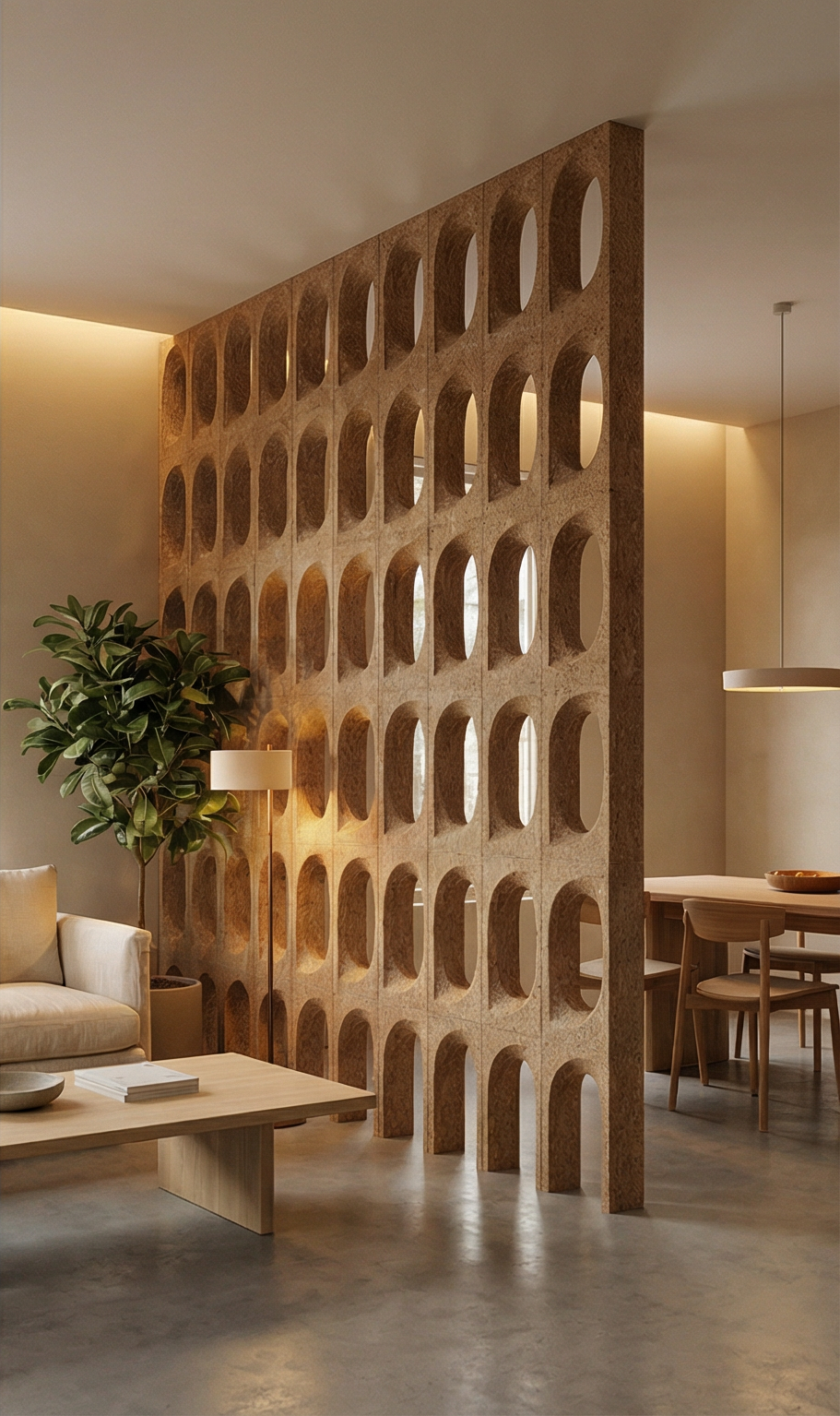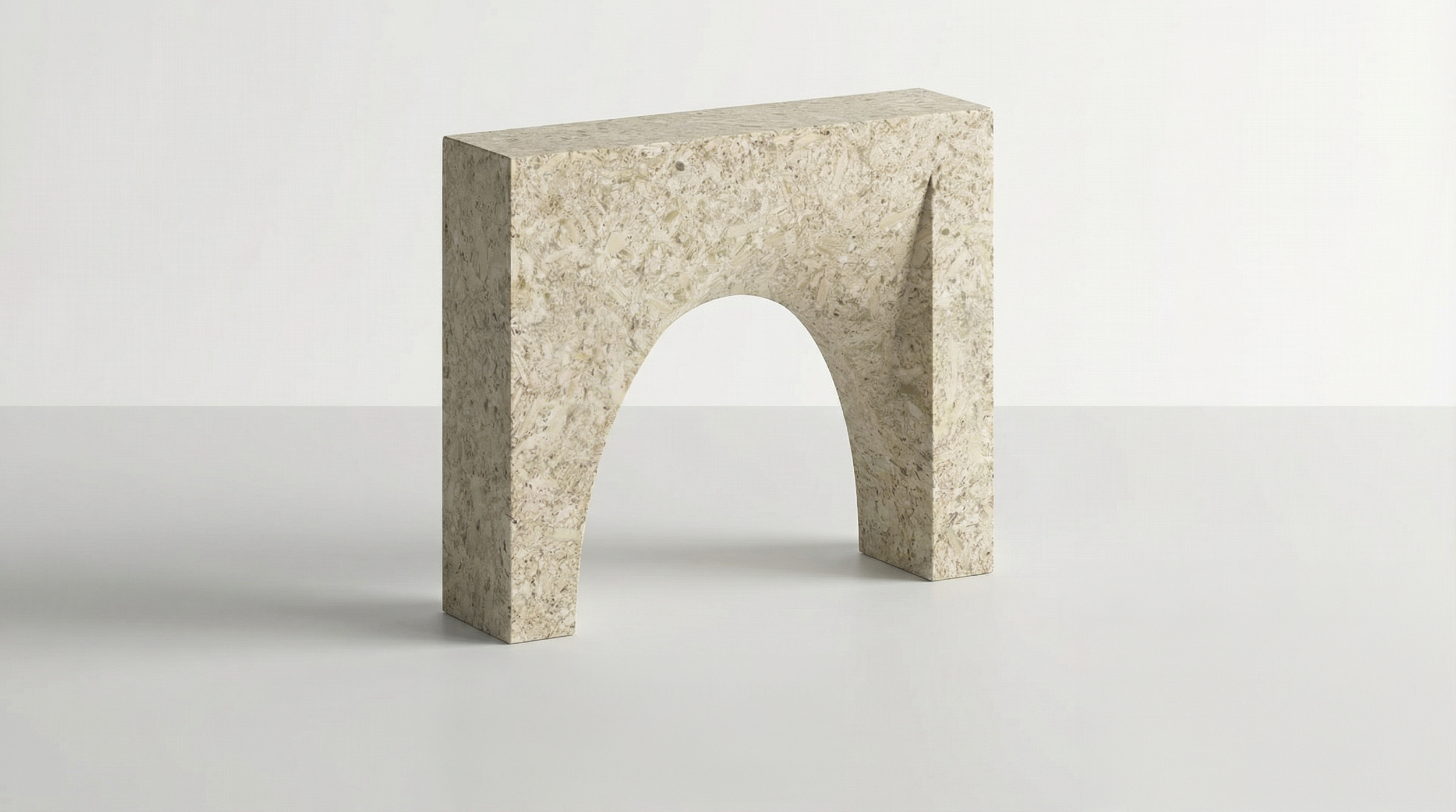
Hand-pressed Breeze Block made from Japanese Knotweed invasive plant biomass. Comprising 70% of the volume of biomass, these modular unit blocks are lightweight and can aggregate into an array of forms to create interior partitions, integration, and support for designs, as well as sculptural architecture.
The biomass was harvested utilizing our ecological restoration service, where we provide a removal of invasive species utilizing non-toxic, carefully certified, soil-safe methods. In turn, we mitigate the land to restore it to native habitats through native planting programs and site monitoring for remediation.
Breeze Blocks as Climactic Architecture
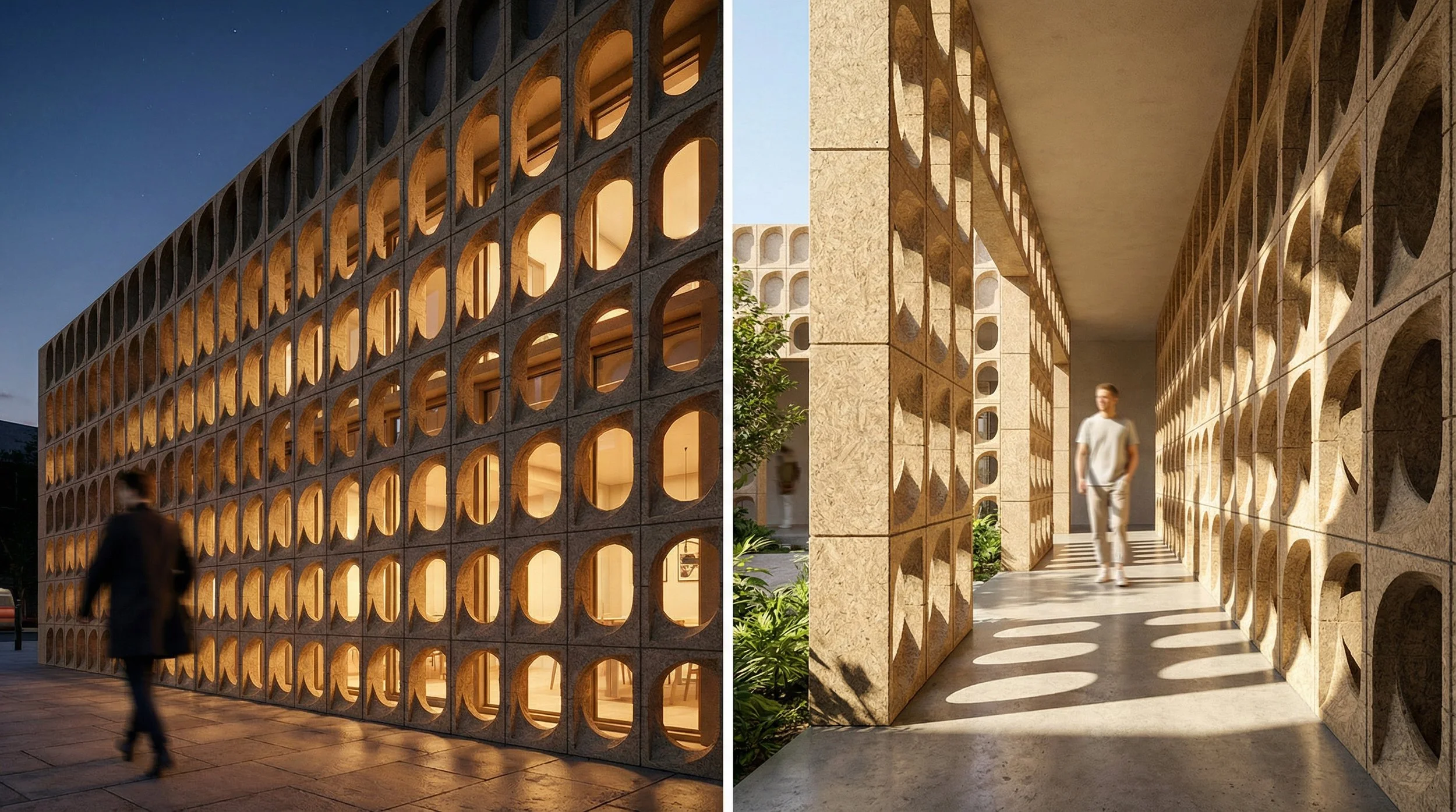
Breeze Blocks function as passive climatic architecture. Their open modular geometry allows natural airflow and daylight to move freely through a building envelope, inviting wind and filtered sun into interior and exterior spaces. Rather than sealing off walls, breeze blocks create breathable surfaces that support ventilation, reduce heat gain, and provide gentle shade.
The patterned apertures break up direct sunlight, casting dynamic shadows while lowering cooling demands. This makes them both a material and a micro-infrastructure—an architectural element that works with environmental forces instead of against them. Used in façades, screens, and partitions, Breeze Blocks help shape comfortable, resilient spaces through entirely non-mechanical means.
Hand-pressed Breeze Block made from Japanese Knotweed invasive plant biomass. Comprising 70% of the volume of biomass, these modular unit blocks are lightweight and can aggregate into an array of forms to create interior partitions, integration, and support for designs, as well as sculptural architecture.
The biomass was harvested utilizing our ecological restoration service, where we provide a removal of invasive species utilizing non-toxic, carefully certified, soil-safe methods. In turn, we mitigate the land to restore it to native habitats through native planting programs and site monitoring for remediation.
Breeze Blocks as Climactic Architecture
Breeze Blocks function as passive climatic architecture. Their open modular geometry allows natural airflow and daylight to move freely through a building envelope, inviting wind and filtered sun into interior and exterior spaces. Rather than sealing off walls, breeze blocks create breathable surfaces that support ventilation, reduce heat gain, and provide gentle shade.
The patterned apertures break up direct sunlight, casting dynamic shadows while lowering cooling demands. This makes them both a material and a micro-infrastructure—an architectural element that works with environmental forces instead of against them. Used in façades, screens, and partitions, Breeze Blocks help shape comfortable, resilient spaces through entirely non-mechanical means.