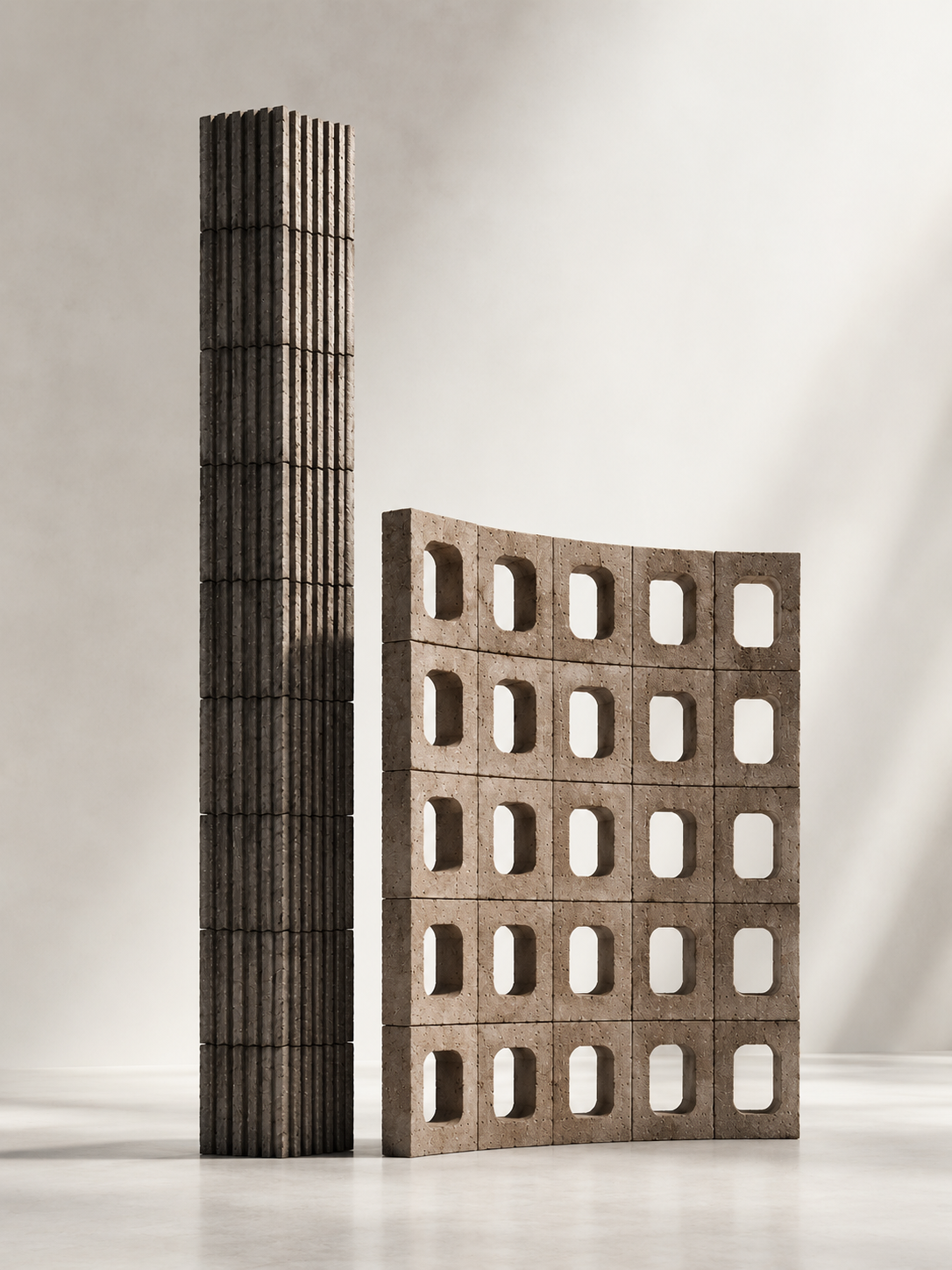
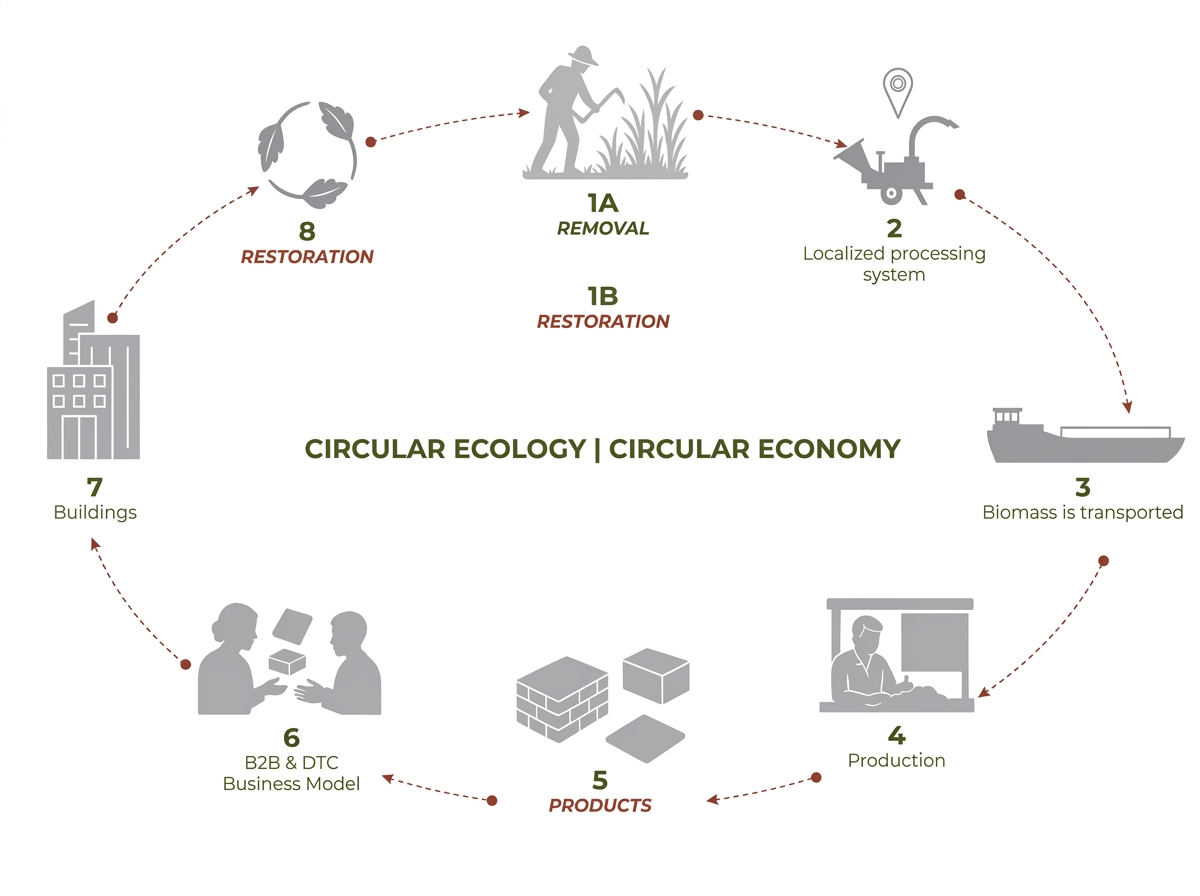
INVASIVE MATTERS pbc is advancing a climate-adaptive, circular manufacturing model by transforming invasive plant biomass into high-performance, non-toxic bio-materials for design and construction. The initiative integrates rigorous ecological protocols for invasive species removal with regenerative native-planting restoration to simultaneously mitigate invasive species impacts and strengthen ecosystem resilience. By diverting biomass waste streams and reducing reliance on extractive, carbon-intensive materials, Invasive Matters establishes a scalable pathway for sustainable industrial design rooted in ecological health and long-term environmental stewardship.

Ashlí Marino Watson
Founder | CEO
An architectural and industrial designer working at the intersection of built environments, industrial design, and ecological innovation. With over ten years of practice spanning high-end residential, large-scale infrastructure, and complex façade systems, her work is rooted in how the spaces we build affect the health of the people and ecosystems they touch.
Her project portfolio ranges from high-performance façade systems on major commercial developments, including the LAX People Mover and Kaiser Permanente facilities, to construction quality control on destination builds such as Legoland New York. Deep expertise in BIM integration, fabrication workflows, regulatory coordination, and on-site construction grounds a practice built equally on execution and vision.
Through AMW-Works, her multidisciplinary design practice, Watson leads projects integrating BIM-driven precision with ecological material thinking. Through Invasive Matters, her Public Benefit Corporation, she is pioneering the transformation of invasive plant biomass into high-performance architectural materials, bridging R&D, fabrication, and venture-scale impact. Her background extends further into regenerative farming systems and ecological supply chains, informing a design approach that treats material sourcing as inseparable from built outcomes.
Her work operates at the intersection of industrial design, architecture, and regenerative systems, translating complex environmental challenges into viable material futures.